


What is an EDM drilling machine?
EDM drilling (also known as EDM drilling) is a technology derived from electrical discharge machining, designed for a very specific purpose: producing deep, small, and precise holes, even in materials that are impossible to drill using conventional methods.
Unlike traditional drilling, which relies on rotating tools and involves the application of mechanical force, EDM drilling uses high-frequency electrical discharges generated between a tubular electrode and the workpiece. What is the advantage? No mechanical stress and no thermal stress, thus avoiding deformation or breakage.
EDM drilling was developed in response to a very specific need: creating starter holes for more complex EDM operations. Today this technology is widely used in sectors where high-depth micro-holes are required, across various applications: aerospace, tooling, turbines, medical components, and automotive.
It should be noted that EDM drilling does not replace mechanical drilling, but rather complements it where it is necessary to drill materials such as carbides, hardened steels, titanium, or refractory alloys.
How does EDM drilling work? It is not sinker EDM
EDM drilling is based on the same principle as sinker EDM, but it is optimized for the rapid and precise production of cylindrical holes.
As in EDM, at the heart of the process is an electrode, in this case tubular, usually made of brass or copper, which rotates at high speed (up to 3000 rpm) and advances toward the workpiece.
High-frequency electrical discharges are generated between the electrode and the material to be drilled, locally vaporizing the metal and creating the hole without any direct physical contact.
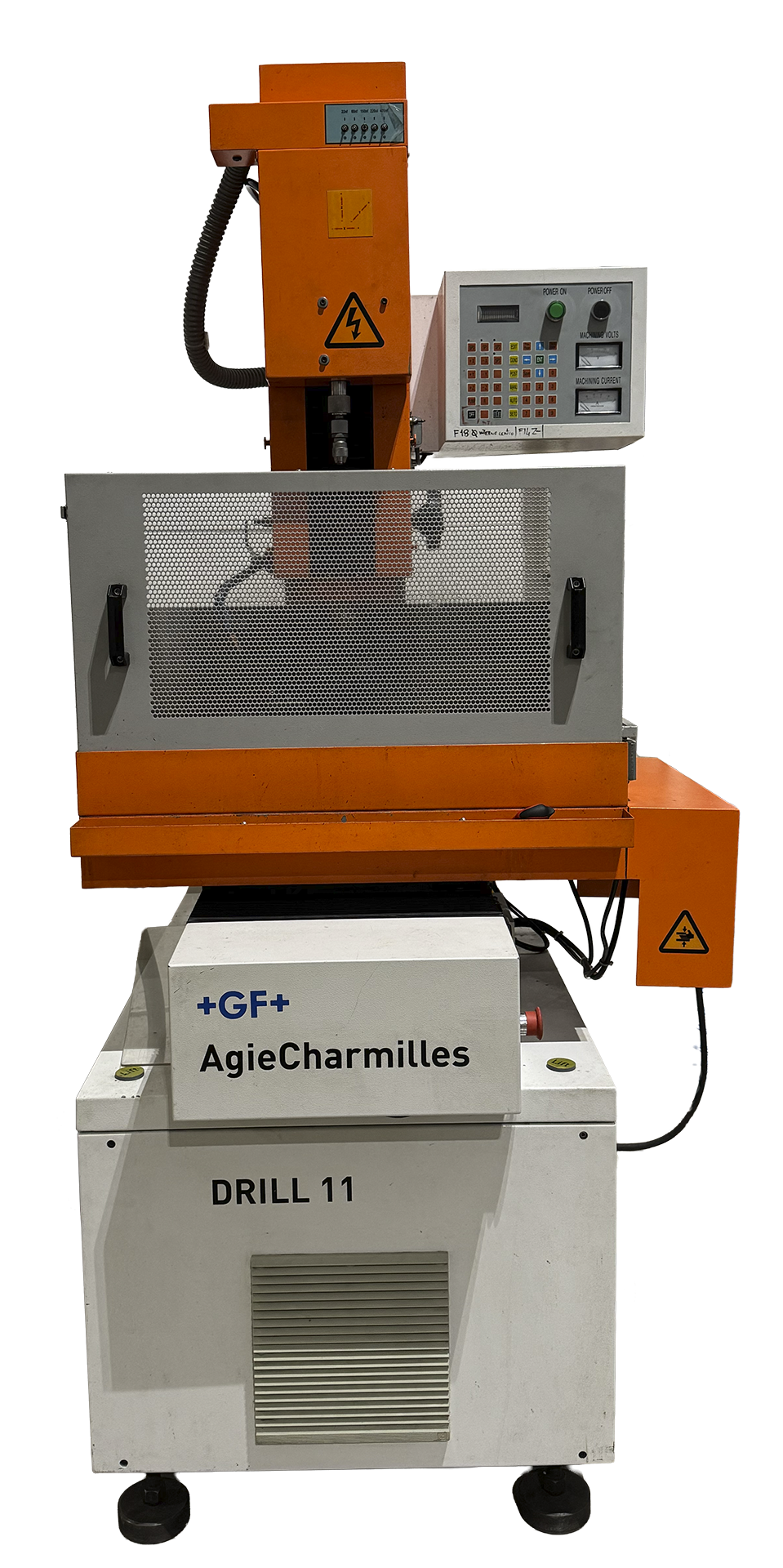
A dielectric fluid (typically deionized water) is injected under pressure through the central hole of the electrode. The fluid cools the area, evacuates removed material, and stabilizes the elctrical arc.
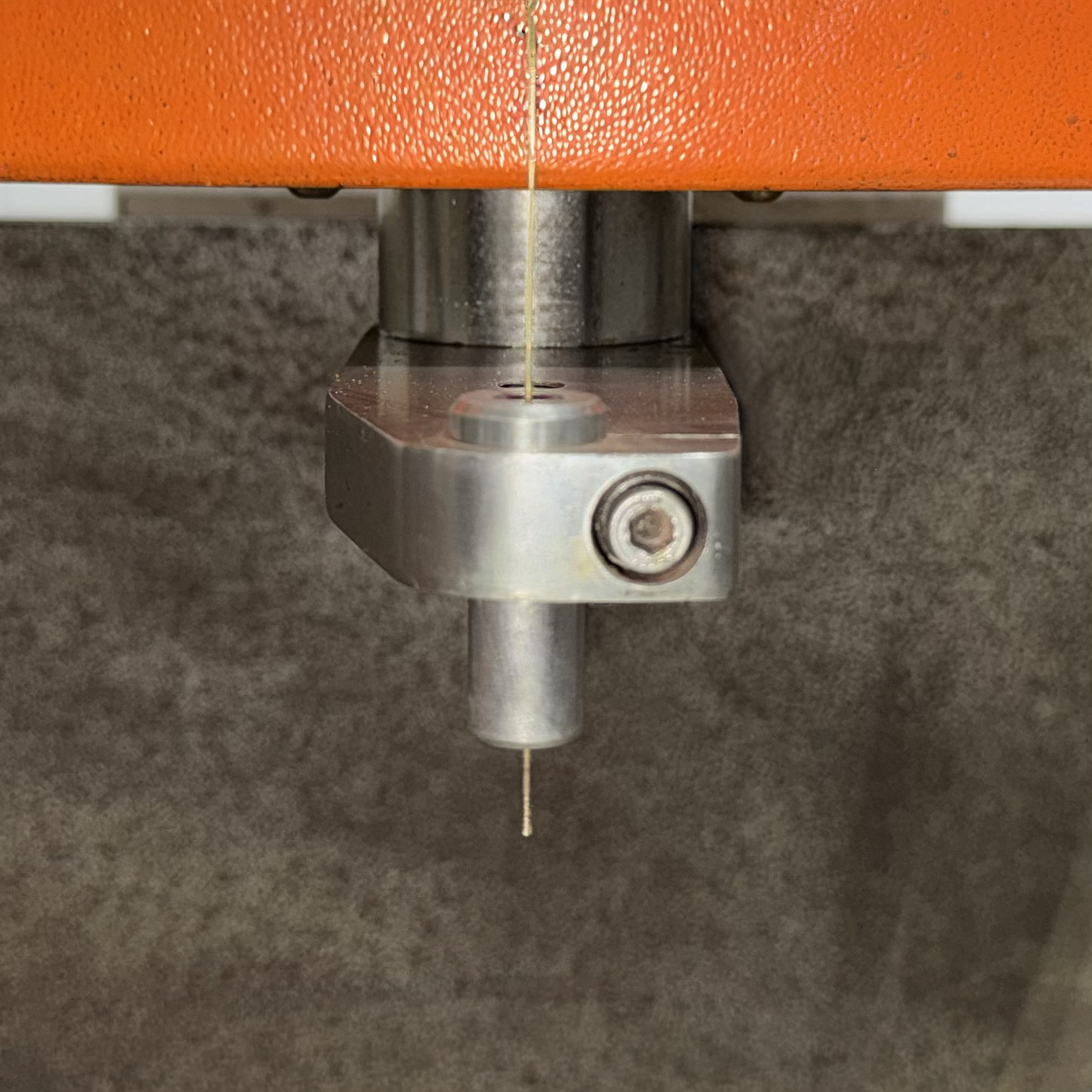
The EDM drilling process also significantly reduces vibrations compared to mechanical drilling, improving hole stability and overall quality.
Geometries, depth and precision of EDM drilling
EDM drilling is a specialized technique fro producing small, precise holes, even in difficult materials such as cemented carbides, hardened steels, inconel, or titanium. Components manufactured using this technology benefit from:
- Minimum and maximum diameters a very small footprint: the achievable hole diameter depends on the type of electrode used. In most industrial applications, diameters typically range from 0.1 mm to 3 mm.
- Geometric tolerances – micrometric precision: thanks to CNC control and the absence of mechanical forces, hole straightness is very high; diameter tolerance can be kept around ±0,01mm. Surface roughness is higher than with mechanical drilling but acceptable for many applications (typically Ra 2-4 µm).
- Depth and length-to-diameter ratio: one of the main advantages of EDM drilling is the ability to create holes with very high length-to-diameter ratios: up to 30:1 or more, depending on the material and the selected electrode. This technology als virtually eliminates the risk of tool breakage or axis deviation.
- Orientation and positioning accuracy: EDM drilling can be performed at an angle, on curved, inclined or hardened surfaces, with extremely precise CNC positioning, even for closely spaced multiple holes (such as in mold cooling or turbine blades).
A beneficial technology… how?
Holes in very hard or difficult materials
Electrodrilling is one of the few technologies that can accurately drill hardened steels, carbide, superalloys, and coated materials.
The second advantage of this technology, like other EDM technologies, is that it allows machining without direct contact, avoiding vibration, deformation or mechanical strain. This makes the process safe even on thin, delicate or complex parts.
The third advantage in the use of electrodrilling is the ability to make, through the combined effect of rotation and pulsed electrical discharge, deep holes with excellent straightness, even when the length-to-diameter ratio exceeds 20:1.
The fourth and final advantage – though not in order of importance – is the ability to drill on curved, inclined, or hard-to-reach surfaces while maintaining high precision. Electro-drilling is often used to create starter holes for wire EDM machining.
So, is EDM drilling suitable for any application? – no
The first aspect to consider with electro-drilling is that the internal surface of the holes is rougher compared to mechanical drilling (Ra 2-4 µm), which makes a subsequent finishing operation necessary for certain applications. It is also important to note that, compared to traditional drilling, electro-drilling requires longer processing times and specialized equipment equipped with EDM generators, CNC axes, and dielectric management systems.
Costs and Economic Considerations of Electro-Drilling
Direct costs include machinery, electrode replacement, electricity, and dielectric fluid. EDM drilling machines require a considerable initial investment, as they are not common machinery. The electrodes used by these machines are made of brass, copper, or special alloys and must be replaced regularly to ensure a perfect hole every time. Despite appearances, the power consumption of an EDM drilling machine is modest; the dielectric fluid, on the other hand, requires filtration and conductivity control systems.
Behind-the-scenes advantages
The absence of physical contact reduces the risk of damaging expensive or complex components with proper integration into the production workflow, makes electro-drilling an economically advantageous solution. In addition, since no mechanical contact occurs, there are no sudden tool breakages – one of the main causes of machine downtime and damage to the part being machined.
Conclusion
EDM drilling is certainly a costly machine, however, the advantages brought by the introduction of the technology guarantee the company a competitive advantage in machining hard metals.