


In the world of precision engineering, technological progress has always followed a clear direction: increasing efficiency without compromising quality. It is within this context that Computer Numerical Control, better known as by its acronym CNC, has revolutionised the very concept of industrial production.
Where once every part was crafted by hand, relying on the operator’s skill and traditional, analog tools, today precision is guaranteed by code. CNC has introduced a new standard, one that brings programmability, repeatability, and accuracy on an industrial scale.
The impact of CNC goes far beyond productivity alone: it is a technology that has transformed the very concept of quality. Identical components, flawless finishes, tolerances within hundredths of a millimeter, full traceability: in many industries, CNC is not just a useful tool but an essential requirement. In this article, we will explore how this technology works, which machines are involved, its advantages over manual machining and, above all, why CNC is increasingly synonymous with quality today.
What is Computer Numerical Control?
Numerical control, or CNC, is a system that automates machine tools using a coded program. This program, typically written in G-code, contains all the instructions needed to perform a machining operations, such as axis movements, cutting depth, tool rotation, and much more.
Unlike conventional machines, where the operator manually adjusts levers and wheels, a CNC machine interprets a file and executes it with micrometric precision. Human error is drastically reduced, and each part can be replicated with extremely tight tolerances.
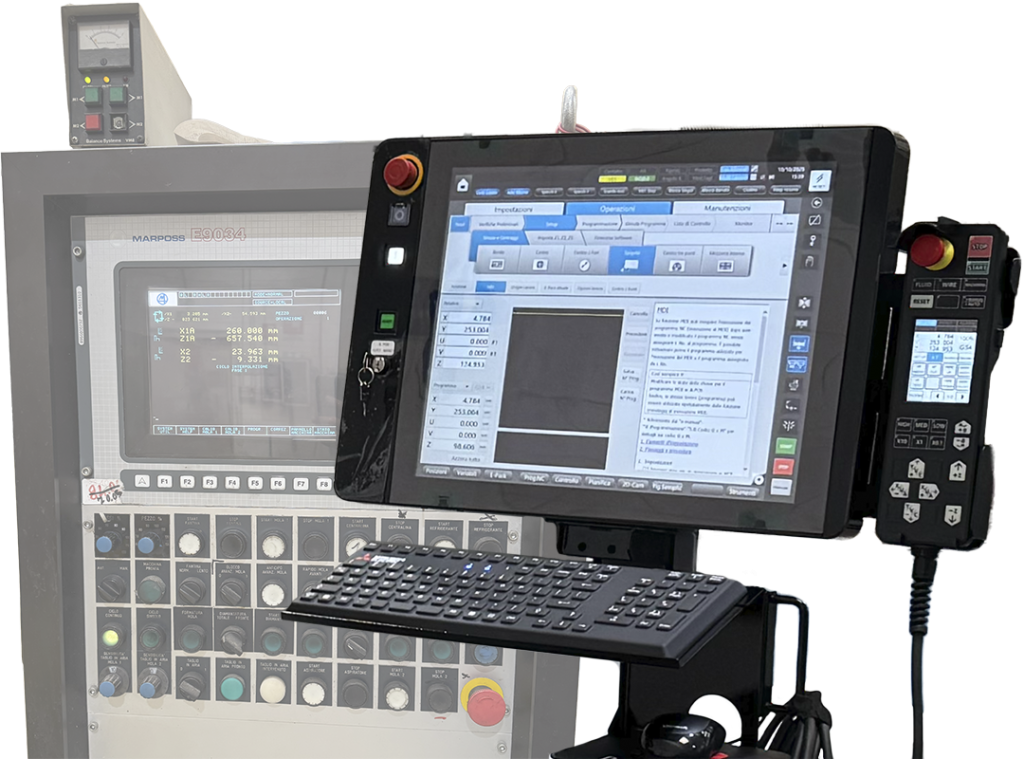
The earliest versions of CNC machines date back to the 1950s, but it is in recent decades, thanks to advances in electronics, IT, and sensors – that a true revolution has taken place. Today these machines are the beating heart of modern workshops: lathes, machining centers, mills, EDM machines, and grinders all operate based on numerical logic.
CNC does not just mean automation: this technology also enables complex geometries, multi-axis machining, virtual simulations before starting automatic compensations, and integrated quality control within the production cycle.
CNC – More Than Just Computers
In the world of precision machining, there are numerous types of CNC machines, each designed for a specific field of application. Choosing the most suitable machine is based on the geometries, materials, tolerances and production volumes required by the company:
- Machining centres – Milling machines – These are ideal for milling, drilling and boring operations on complex parts. They can be equipped with 3, 4 or 5 axes, with rotary tables and tilting heads that allow machining on multiple sides without manual repositioning. These machines are typically used for the production of high‑precision mechanical components, moulds, tooling and aerospace components.
- Lathes – An evolution of the traditional manual centre lathe, they allow the machining of cylindrical parts through turning, drilling, threading and grooving operations. More advanced models feature driven tools and a Y axis, effectively turning them into true turn‑mill centres. CNC lathes are essential for the production of bushings, shafts, fittings and flanges.
- EDM machines – A technology we have already explored in a previous article, Electrical Discharge Machining (EDM) is used in the production of moulds, inserts and complex components with internal geometries that cannot be achieved using other machining methods.
- Micro‑machining CNC – a rapidly growing field, it includes miniaturised milling machines and lathes for the production of micro‑mechanical, medical and watchmaking components. These machines operate with tolerances below one hundredth of a millimetre.
The advantages of CNC in Modern Manufacturing
The transition from traditional machines to CNC systems has represented a major turning point for the mechanical engineering industry. It is not merely a matter of automation, but a profound evolution in terms of quality, efficiency and repeatability:
- Micrometric precision – CNC machines make it possible to machine parts with extremely tight tolerances, even below ±0.01 mm, reducing scrap and improving overall part quality. This capability is essential in sectors where every micron counts, such as aerospace, medical applications and micro‑mechanics.
- Process repeatability – Once programmed, a CNC cycle can be repeated hundreds of times without significant variations from one part to another. The main variable remains tool wear over time, which can however be monitored and managed in a controlled manner. This ensures consistent results even across large production volumes, while minimising human intervention.
- Reduction in machining time – Thanks to optimised cutting strategies, the use of multi‑tasking tools and the ability to machine on multiple axes simultaneously, production times are significantly reduced. Secondary operations, such as part handling or inspection, can also be integrated into the machining cycle.
- Flexible programming – Modern interfaces allow complex machining operations to be managed using advanced CAM software, 3D simulations and rapid customization. Numerical control can now be considered a digital extension of the designer, capable of turning ideas into shapes with extremely high precision.
- Integration with industrial automation – Modern CNC machines are able to communicate with loading and unloading robots, vision systems and company management software. This makes them central elements in flexible manufacturing systems (FMS).
The role of Computer Numerical Control in Quality Control
CNC machines today are not mere production tools – they actively participate in the quality control process. This shift makes quality something ensured during machining, not just after.
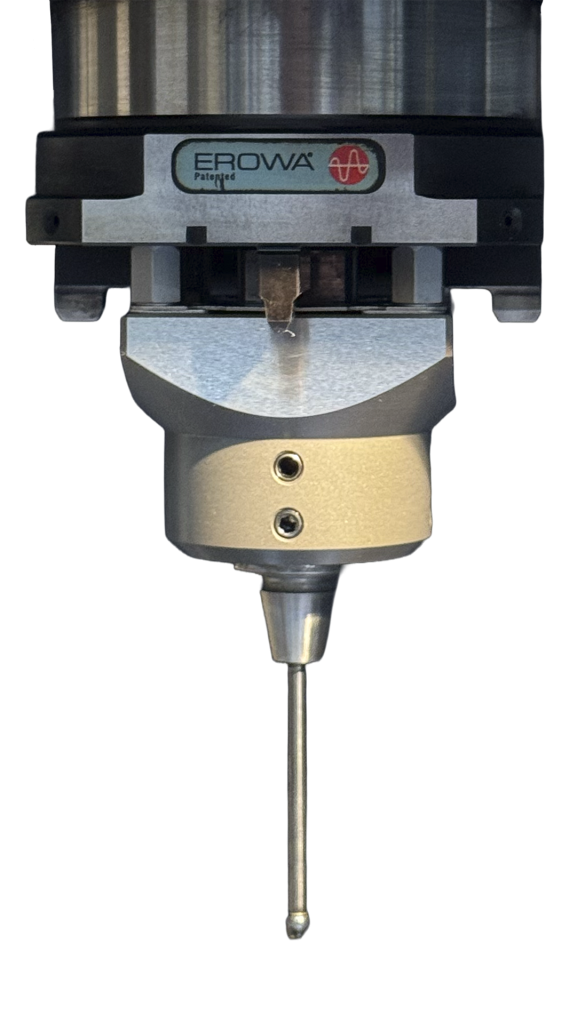
Misurazioni integrate nel ciclo
Many CNCs are equipped with probes that measure part dimensions directly inside the machine, without removing it. These probes check diameters, depth, flatness, or alignment. If measurements differ from nominal values, the CNC automatically updates compensations and tool paths.
Traceability and Automatic Reports
Through integrated software, every stage of the machining process is monitored – recording data such as tool usage, machining cycles, cutting conditions, timings, and any alarms.
These values are automatically saved, ensuring full traceability and enabling the generation of control reports, which simplify quality documentation and analysis.
Real-Rime Feedback
Modern CNC machines communicate with MES systems or IIoT platforms, constantly transmitting information on machine status and process conditions. This real-time monitoring helps detect anomalies, prevent errors, and signal corrective actions before defects occur.
Higher Quality, Fewer Reworks
A proper integration between production and inspection dramatically reduces the number of non-conforming parts and prevents reworks or material waste. In Lean Manufacturing terms, this represents a strategic advantage: lower costs, less downtime, greater efficiency.
CNC and Industry 4.0
Numerical Control is far more than a simple machine tool; it is a strategic node within smart factories, where production, data, and digital systems operate in synergy. In the era of Industry 4.0, CNC systems represent one of the key elements driving digital transformation of precision manufacturing.
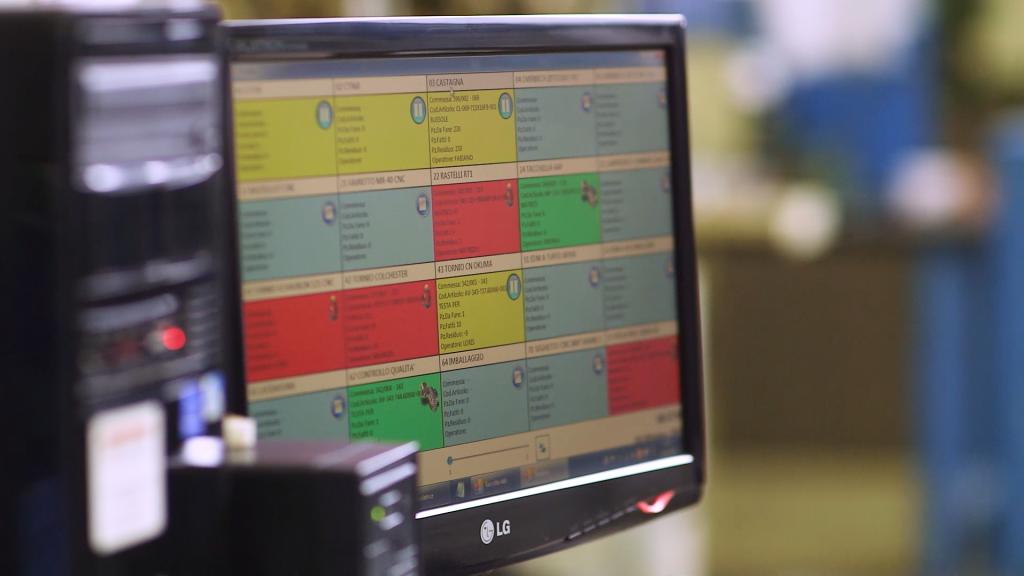
Connectivity and Communication
Next-generation CNC centres are designed to communicate continuously with other machines, management software (ERP, MES), sensors, and supervisory systems. Thanks to standard protocols such as OPC UA and MTConnect, machines can transmit production data, machine status, energy consumption, and performance in real time.
Industrial Internet of Things (IIoT)
With the integration of sensors and connected devices, CNC machines can collect a wide range of data – vibrations, temperature, energy consumption, coolant pressure, and tool wear. This data can be processed via cloud or edge computing to enable predictive maintenance, automatic parameter optimisation, and early detection of anomalies.
Process analysis and Optimisation
Interconnected CNC machines make it possible to build digital twins of production processes, simulating scenarios and anticipating bottlenecks or defects. Advanced analytics algorithms support continuous improvement, revealing inefficiencies that would otherwise remain hidden.
Artificial Intelligence and Machine Learning
Some of the most advanced CNC systems integrate AI capabilities, such as recognition of machining patterns, adaptive parameter tuning, and decision support for operators. The result is smarter adaptive machining that is more resilient to unexpected conditions.
Automation and Integration
Combined with the latest technological developments introduced by Industry 4.0 – such as robotics, automated warehouses, pallet changers, and handling systems – CNC machines become part of flexible cells or fully automated production lines, capable of operating even without direct human supervision.
Conclusion
Today CNC machines are so common in precision workshops that it’s easy to forget the revolutionary impact they had. From a production standpoint, CNC technology has made it possible to scale mechanical processes in ways previously unimaginable, producing “identical” components with tolerances below ±0.01 mm. Industry 4.0 has opened the door to new innovations that continuously improve this increasingly intelligent, interconnected technology.
QP Mechanics is a company in constant evolution. Having already embraced the Industry 4.0 philosophy, it has implemented advanced control systems that ensure every component meets the highest standards of precision and quality craftsmanship.